Books read in 2025
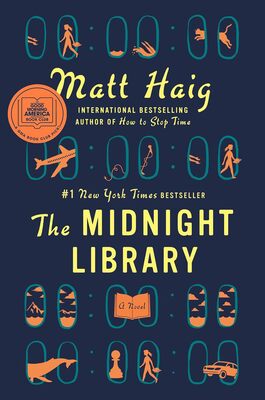
01 - The midnight library, by Matt Haig.
A lot of people think this book is overrated, but I liked it. It is not without its flaws but it does deliver an important message, specially for those people who are struggling to find peace and acceptance on their daily lives. The grass always seems greener on the other side but it does not mean it is better. In order to gain some things we have to lose something (or someone) else and that could be a very big deal breaker.
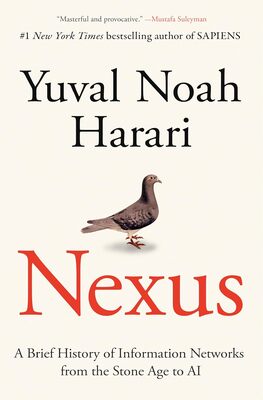
02 - Nexus, by Yuval Noah Harari.
Yet another one of Harari’s interesting books that talks about politics, futurism, technology and the preludial human history that has led us here. It starts discussing information networks and continues with topics like the witch hunts, populism, war, and more prominently, social media algorithms and how they are usually misguided into goals that are actually detrimental to the users.
This is a good book, but I would recommend Harari’s other books before this one since it feels a little bit like a series of discussions that do not have a central theme.
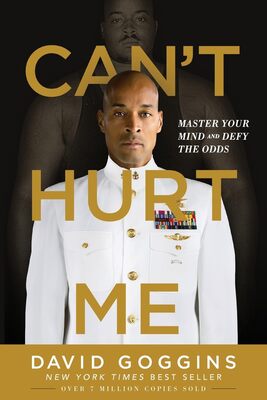
03 - Can’t hurt me, by David Goggins.
David Goggins had a disastrous past. His childhood was ruined by his abusive father and then suffered from extreme racism as a teenager. He could have easily turned to drugs, crime or other destructive ways to endure his traumas, but he eventually found direction in exercising and joining the military to become a Navy SEAL, among many other things. He insists that this is not a motivational or self-help book. In fact, Goggins despises the modern concept of motivation and argues that discipline and the goal of raising the bar in everything should be enough to get you out of any undesirable situation, both mentally and physically. There is indeed a lot of wisdom in this book. Goggins subjects his body to extreme punishment and suffering in order to achieve his objectives, and I do not think most people should follow his example in this. However, I do admire his mindset and how he managed to shift his perspective on both physical and mental suffering. Sometimes it is hard to hear and face the truth, and even harder to endure the effort that is needed to transform our weaknesses into strengths, but this book does a fantastic job in telling an inspiring story, and reminding us that we can achieve so much more if we work hard to surpass what we see as our own limits.
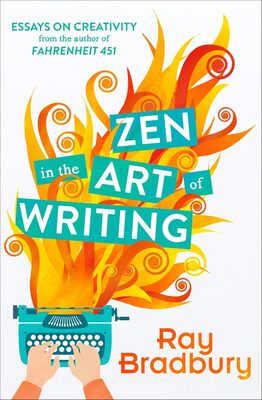
04 - Zen in the art of writing, by Ray Bradbury.
The legendary Ray Bradbury wrote a book about writing books and it contains excellent advice for aspiring authors, regardless of the genre. Not just his personal approach to writing and creating new ideas, but also a few poems that are worth a read.
05 - The subtle art of not giving a fuck: A counterintuitive approach to living a good life, by Mark Manson.
This is quite a famous book that I seem to find in every bookstore. I understand its appeal since it preaches the need to stop worrying about small problems and how modern society, news and marketing tries to increase the volume in the message that says we should keep worrying about how few material possessions we have. It also talks about how we feel attracted to the idea of becoming famous or wealthy, but we do not really care about the work that needs to be done in order to maybe achieve that status.
Its message is not that you should not care about anything, it is that you should only care about what is really important to you. That being said, the book feels like a collection of blog posts that sometimes feels disconnected. The author is indeed a blogger so it is easy to understand the reason behind that.
06 - The knowledge: How to rebuild civilization in the aftermath of a cataclysm, by Lewis Dartnell.
The most absurd nightmare would be a post-apocalyptic society discovering a few yellowed and crumbly books and, thinking them the scientific wisdom of the ancients, trying to apply homeopathy to curb a plague or astrology to forecast harvests.
One of the most potentially useful and interesting books I’ve read. If society collapses tomorrow, this book would prove to be one of the most valuable possessions that anybody could have. It gives detailed instructions on how anybody could recover the progress that mankind has achieved in terms of agriculture, construction, navigation, chemistry, metallurgy, medicine, communication, photography, transportation, clothing and many other basic subjects that, in turn, will allow for further progress.
I was pleasantly surprised in how elegantly this book was written, not in the preparation-obsessed fear-inducing way that I’ve come to expect from books that talk about the fall of civilization. The difference is that this particular book is not worried about helping protect yourself or your family, it is instead aimed at preserving the knowledge that our civilization painfully accumulated for millennia.
This is basic information that should be taught in schools all over the world, but alas, we all know that it is rarely taught as it should. That is why I would implore anybody to read this book and understand the importance of its message.
07 - A brief history of timekeeping: The science of marking time, from Stonehenge to atomic clocks, by Chad Orzel.
Since the early civilizations, people have known that we need to understand the rhythm of time flow in order to prepare for the future and know how soon an event will happen. This book is a fascinating narration of how that happened and it also shows the precise modern methods that we frequently improve in order to reliably keep track of time.
The intricate relationship between time and space is also discussed. Once the explorers started sailing to other continents, they realized that they needed a reliable way to know what time it was, otherwise they would not know where in space they were. This started a race to build a portable clock that did not require a pendulum-an engineering problem that was discouragingly hard for the technology of that time. This is one of the most interesting parts of the book and it alone gave me a renewed sense of fascination while looking at my cheap quartz watch that would have been the most revolutionary piece of technology just a few centuries earlier.
Many other topics are covered in this captivating book. For example, the creation of time zones and the strong opposition to them or the women that used to work door to door, carrying a watch, the latest gossip and the “correct” time so people could resync their clocks.
08 - Bird by bird: Some instructions on writing and life, by Anne Lamott.
Real good advice in here, and not just for aspiring writers. I still prefer the book by Ray Bradbury mentioned above, but this one is a nice companion to it. It talks much more about the mindset that an aspiring writer should have and how doubt and rejection will probably play a role in their quest to write.
09 - Don’t believe everything you think: Why your thinking is the beginning and end of suffering, by Joseph Nguyen.
This short book was a reminder that most problems in life are only made worse by our own assumptions and fears. We indeed suffer more in our minds than in reality, but the good news is that we have the capability to stop overthinking and either let things happen or do something to solve our problems.
10 - Sandworm: A new era of cyberwar and the hunt for the Kremlin’s most dangerous hackers, by Andy Greenberg.
The detailed story of a group of hackers codenamed “Sandworm” which has been linked to international attacks and have caused disruptions in important events like the Olympic games and presidential elections in enemy territories.
The successful attacks to civilian infrastructure like the electric grid are a sobering reminder of how reliant we are on the internet, and how fragile it is. If anything, this book made me much more interested in living off the grid and having analog backups for anything I truly need.
Cyberwarfare is here to stay and it is a very attractive proposition to hostile governments that can simply blame the attacks on rogue teenagers located inside their border while it is actually being done by a highly trained and focused military division. This form of warfare is also much cheaper than sending troops, planes and ammo to the other side of the world, so this should be a serious warning for all countries that are still considering cyber attacks as something that only happens in movies. Nowadays a country could easily be the target of an attack and become uncommunicated and defenseless before they notice anything unusual, and at that time it is way too late.
The book is very focused on politics, which results in some boring chapters, but it is still interesting to know the history behind infamous malware like Stuxnet, NotPetya, WannaCry and Mimikatz.
11 - The psychology of money, by Morgan Housel.
An amazing short book about how different perceptions affect our relationship with money. It analyzes the psychology behind the actions of billionaires who lost everything and humble people that saved fortunes just by being indifferent to the fluctuations of the economy. This is truly a fascinating book that unfortunately many people will ignore because it gives the initial impression of being a manual on how to change our mentality with the goal of becoming richer.
12 - Siddhartha, by Herman Hesse.
Every time I read this book I feel extremely peaceful and most of people I know that have read it share the same opinion. It follows the life of Siddhartha, a young man that decides to abandon his family in search for enlightenment. It is full of symbolism but it is easy to follow for those of us that do not have any training or context in terms of meditation or the quest to achieve a higher mental state.
It is definitely a book I would recommend to anybody, specially to those who are questioning the importance of their lives and their place in the universe.
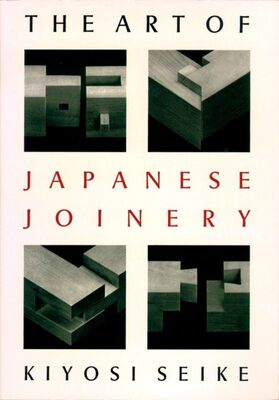
13 - The art of japanese joinery, by Kiyosi Seike.
A very technical book, written by a japanese architect. Focusing on japanese wooden construction, I was hoping this book would talk more about furniture of even decorative woodworking, but unfortunately it is mainly praise after praise to how the japanese construction using wood is far superior to more modern techniques, even in the midst of a literal fire.
That being said, the ancient japanese builders do deserve praise to the ingenious ways in which they built long lasting and beautiful structures without a single nail, which was basically impossible to get at the time due to Japan’s poor mineral deposits.
Overall, I would only recommend this book if you are seriously studying the very specific subject of the traditional japanese techniques for building houses and temples out of wood.
I was also disappointed on the low number of pictures in a book which title starts with “The art of”.
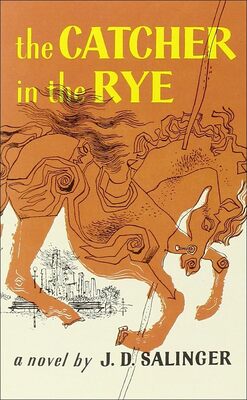
14 - The catcher in the rye, by J.D. Salinger.
“All right-the Mr. Vinsons. Once you get past all the Mr. Vinsons, you’re going to start getting closer and closer-that is, if you want to, and if you look for it and wait for it-to the kind of information that will be very, very dear to your heart. Among other things you’ll find that you’re not the first person who was ever confused and frightened and even sickened by human behavior. You’re by no means alone on that score, you’ll be excited and stimulated to know. Many, many men have been just as troubled morally and spiritually as you are right now. Happily, some of them kept records of their troubles. You’ll learn from them-if you want to. Just as someday, if you have something to offer, someone will learn something from you. It’s a beautiful reciprocal arrangement. And it isn’t education. It’s history. It’s poetry.” He stopped and took a big drink out of his highball. Then he started again. Boy, he was really hot. I was glad I didn’t try to stop him or anything. “I’m not trying to tell you,” he said, “that only educated and scholarly men are able to contribute something valuable to the world. It’s not so. But I do say that educated and scholarly men, if they’re brilliant and creative to begin with-which, unfortunately, is rarely the case-tend to leave infinitely more valuable records behind them than men who are merely brilliant and creative. They tend to express themselves more clearly, and they usually have a passion for following their thoughts through to the end. And-most important-nine times out of ten they have more humility than the unscholarly thinker. Do you follow me at all?”
The catcher in the rye is one of the most beloved books in the United States, and it is easy to understand why. Paradoxically, it also appears very frequently in lists of banned books in schools of the United States, and this is also easy to understand.
It tells the story of Holden Caulfield, a teenager that decides to flunk out of school and roam around New York until he figures out what to do next. Of course, he gets in all sorts of trouble and breaks a few laws along the way.
It is written as a sort of diary, using the vernacular of a male teen in the New York of the fifties. This style was pretty annoying at first and the book also has a slow start so I almost stopped reading at one point, but I am glad I continued. I slowly became more interested in discovering where and how Holden’s story was going to end.
I have to admit that once I finished the book I felt like I got to know a friend that I would miss. For this reason, I would recommend this book to anybody, and if that is not enough, you should at least read it because there are some people out there that don’t want this book to be read.
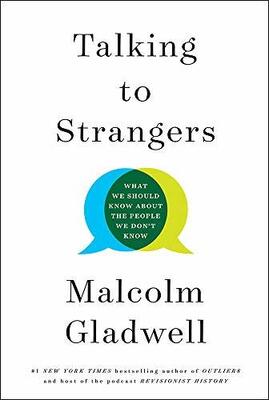
15 - Talking to strangers, by Malcolm Gladwell.
A tragic and incredibly interesting analysis of misunderstandings, misdirection, confusion and just plain old-fashioned manipulation while two humans share information. Quite tragic at times, and quite incredible at other times, but I would rank this book as one of the weaker ones by Gladwell. Still, it is worth a read if you are interested in social studies, persuasion or espionage.